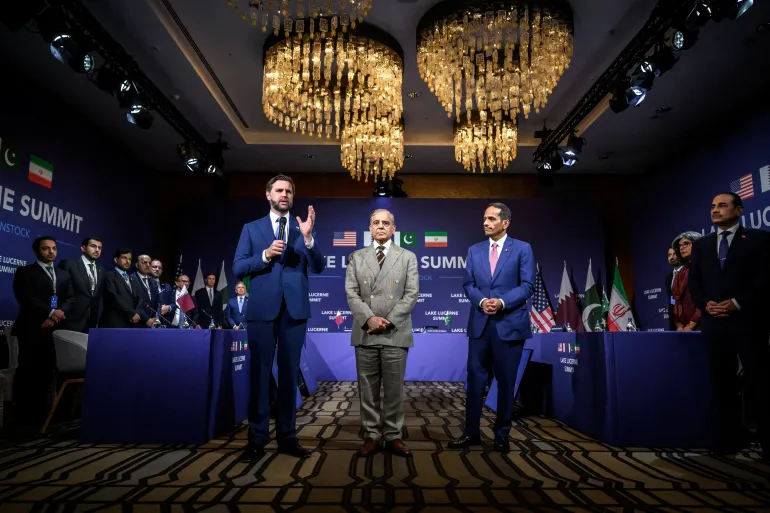
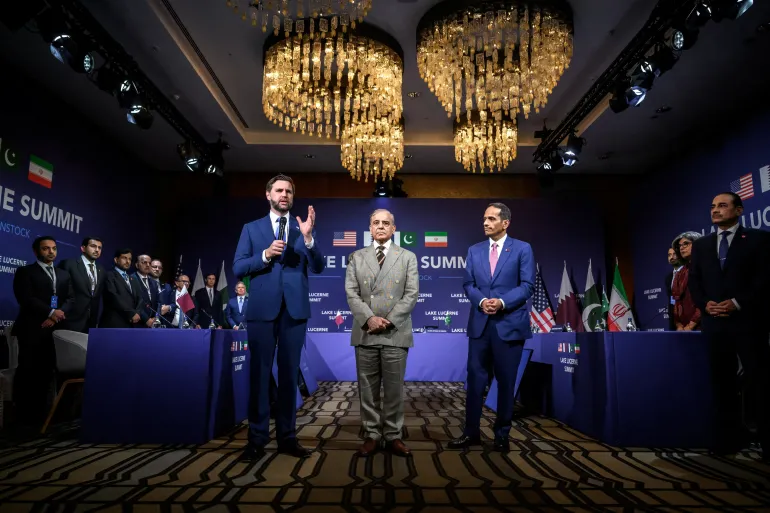
A fragile, Pakistan-brokered Memorandum of Understanding (MoU) signed between the United States and Iran was supposed to bring a strategic pause to months of devastating military conflict. Instead, the deal has hit a massive roadblock, triggering a fresh wave of tit-for-tat military strikes across the Persian Gulf.
At the absolute center of this dangerous breakdown is Article 5—a highly controversial provision meant to handle the reopening of the strategic Strait of Hormuz, through which roughly one-fifth of global oil supplies flow.
What Exactly is Article 5?
Article 5 was designed as the logistical roadmap to end Iran’s de facto blockade of the Strait of Hormuz, which originally began following U.S.-Israeli strikes on Iran.
According to the official text of the agreement:
- The 60-Day Reopening: Iran committed to using its “best efforts” to ensure the safe passage of commercial vessels through the strait without charging any transit fees for a period of 60 days.
- The 30-Day Demining Window: Tehran agreed to clear all “technical and military obstacles,” including naval mines, within the first 30 days so normal shipping lanes could gradually be restored.
- Future Administration: Iran agreed to conduct diplomatic talks with the Sultanate of Oman and other neighboring Gulf states to define the long-term maritime services and administration of the waterway.
The Core Conflict: One Text, Two Wildly Different Interpretations
While the text sounds straightforward on paper, the entire agreement is faltering because Washington and Tehran are reading it in completely opposite ways.
1. Tehran’s View: “Total Iranian Control”
Iranian Foreign Minister Abbas Araghchi and the Islamic Revolutionary Guard Corps (IRGC) argue that Article 5 places the responsibility for managing the reopening strictly in Iran’s hands. Tehran interprets the clause to mean that the Strait of Hormuz remains under its exclusive oversight during the 30-day demining phase.
As a result, the IRGC has declared that the only authorized maritime route for commercial traffic is a northern shipping corridor running directly through Iranian territorial waters. They demand that all ships respect their rules and route choices.
2. Washington’s View: Bypassing the Standoff
Conversely, the United States is actively trying to bypass Iranian oversight. U.S. officials are pushing for alternative transit routes closer to Oman, entirely outside of Iranian territorial waters.
Geopolitical analysts note that Washington feels the MoU should guarantee immediate free navigation, viewing Iran’s enforcement of a specific northern corridor as a breach of the deal. Foreign policy experts argue that the U.S. is essentially trying to bypass the terms it signed, while trying to force Iran to stick strictly to the text.
From Diplomatic Gridlock to Active Warfare
This clash over who actually controls the shipping lanes has quickly spilled out of the negotiating room and back onto the water:
She was shifted to the Services Hospital where doctors pronounced her dead. Hospital staff noted a ligature mark around her neck.
Investigators said the washroom was of 2×3 feet and a nylon rope used for drying clothes had one end tied near the door lock.
CCTV footage from a shop opposite the house showed no unknown person entering or leaving. The only male present, the 60-year-old father of the teachers, Abdul Rauf, was questioned, but no evidence has linked him to the incident so far.